Vision-Assisted Adaptive Cruise Control
A Raspberry Pi vehicle that follows a lead car, stays in its lane, brakes for obstacles, and recognizes stop signs.
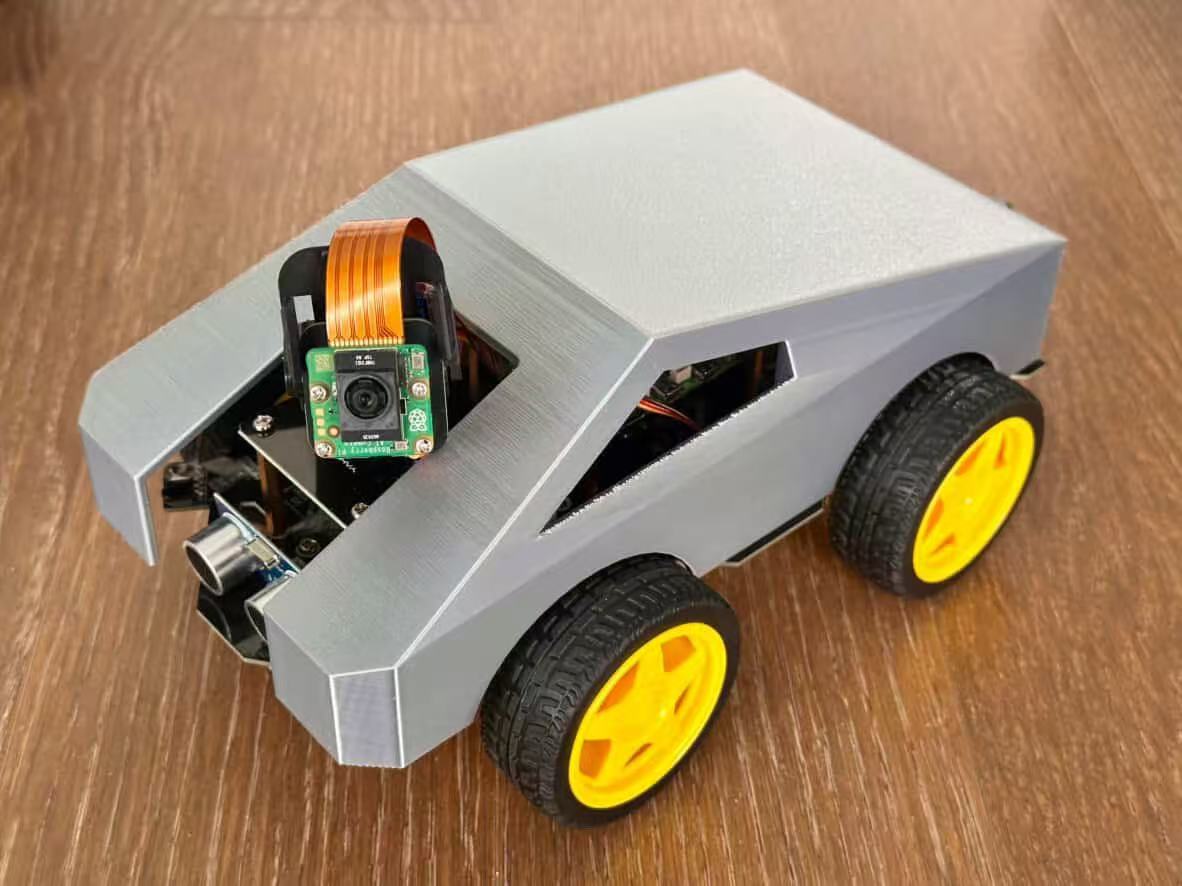
The result
Our four-person team built a Raspberry Pi vehicle combining adaptive cruise control, lane keeping, emergency braking, and stop-sign detection. It passed all six planned validation categories.
| Performance metric | Result |
|---|---|
| Control-loop rate | 10 Hz |
| Cruise speed | ≈0.4 m/s |
| Following-distance target | 30 cm |
| Steady-state following error | Within ≈5 cm |
| Sensor-to-command reaction time | ≈100 ms |
| Stop-sign detection range | 30–60 cm |
| Vision-processing latency | ≈150–200 ms/frame |
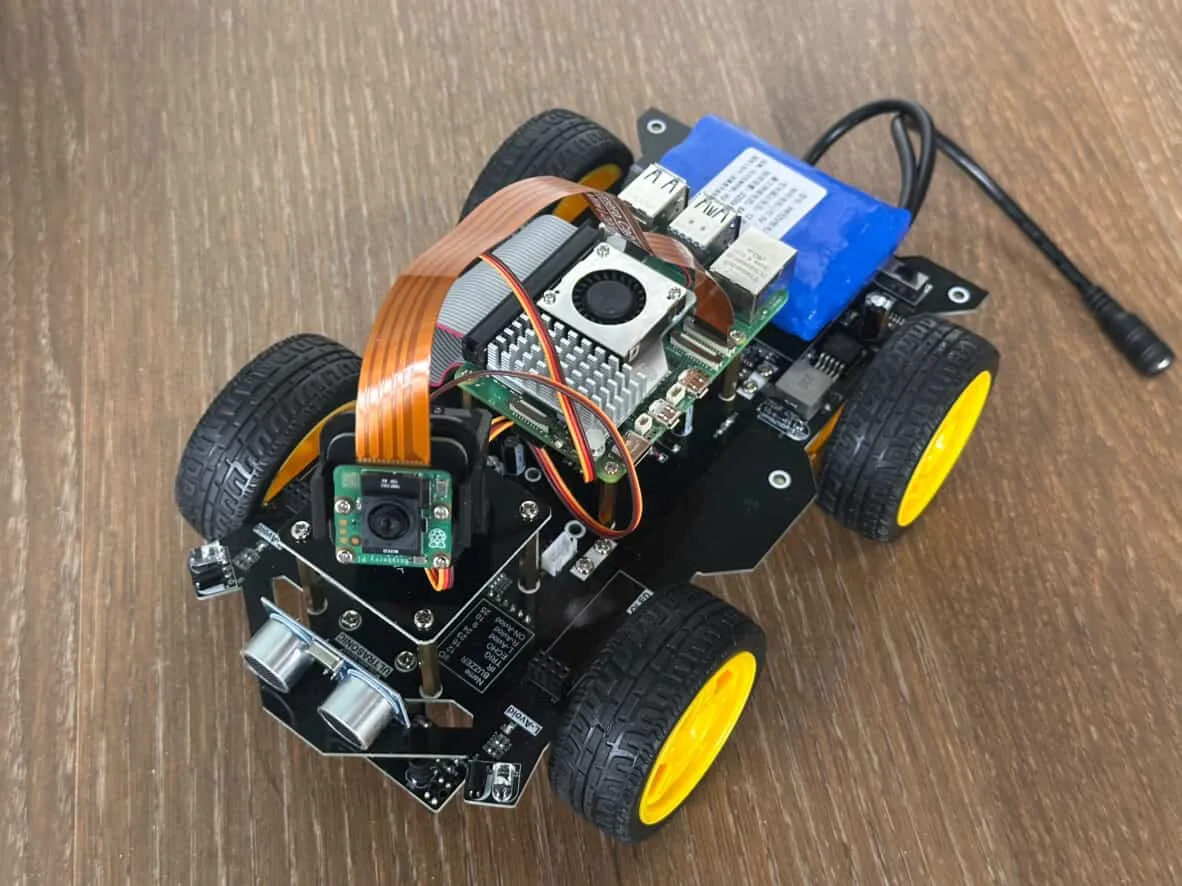
Raspberry Pi, sensors, power electronics, and drivetrain.
How it works
A Raspberry Pi 5 reads an ultrasonic sensor, four-channel IR line sensor, and Pi camera, then commands four DC motors through two drivers. A 12 V battery powers the motors; a 5 V regulator supplies the Pi. The single-threaded Python control loop runs at 10 Hz.
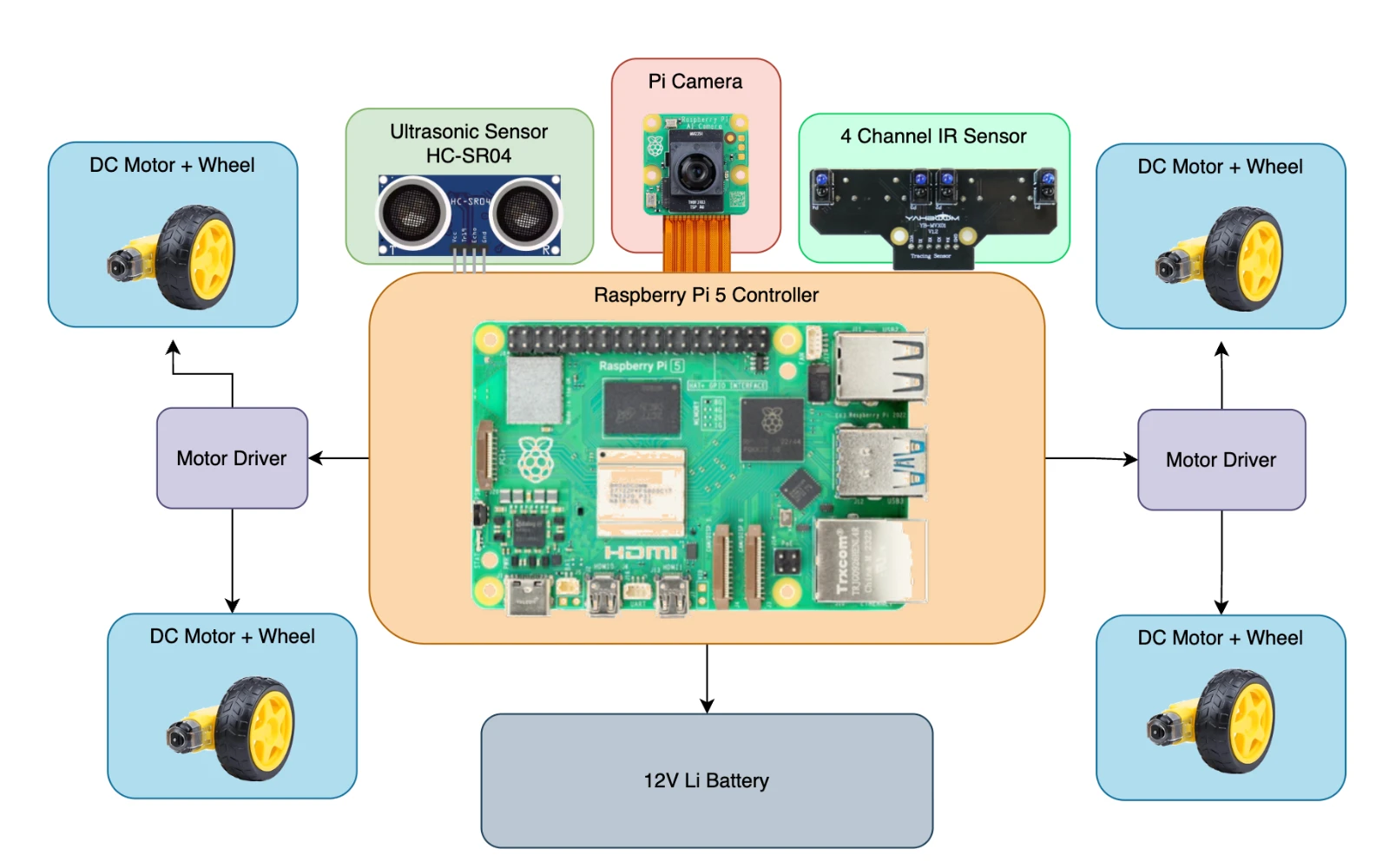
Power, sensing, and motor connections.
Emergency braking overrides all commands when an obstacle enters the 10 cm safety zone. Stop-sign handling takes priority next, followed by normal lane keeping and cruise control.
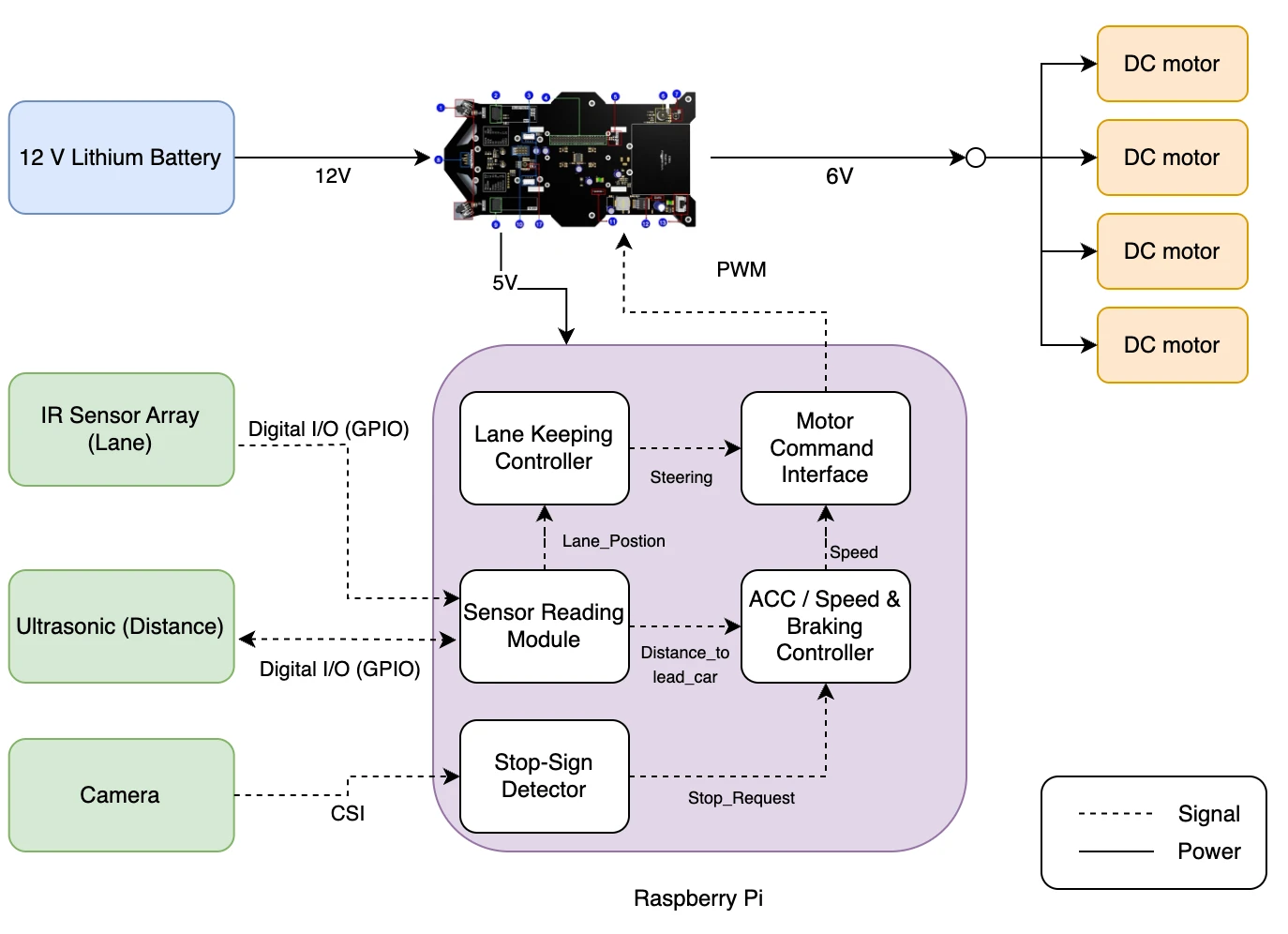
Control priorities and signal flow.
Tuning on the track
The ultrasonic PID controller maintains a 30 cm following gap. Reducing proportional gain and adding a small integral term brought steady-state error within 5 cm, versus the original ±10 cm requirement.
IR sensor patterns set steering corrections. Sunlight initially confused the array; threshold tuning and physical shrouds improved outdoor reliability.
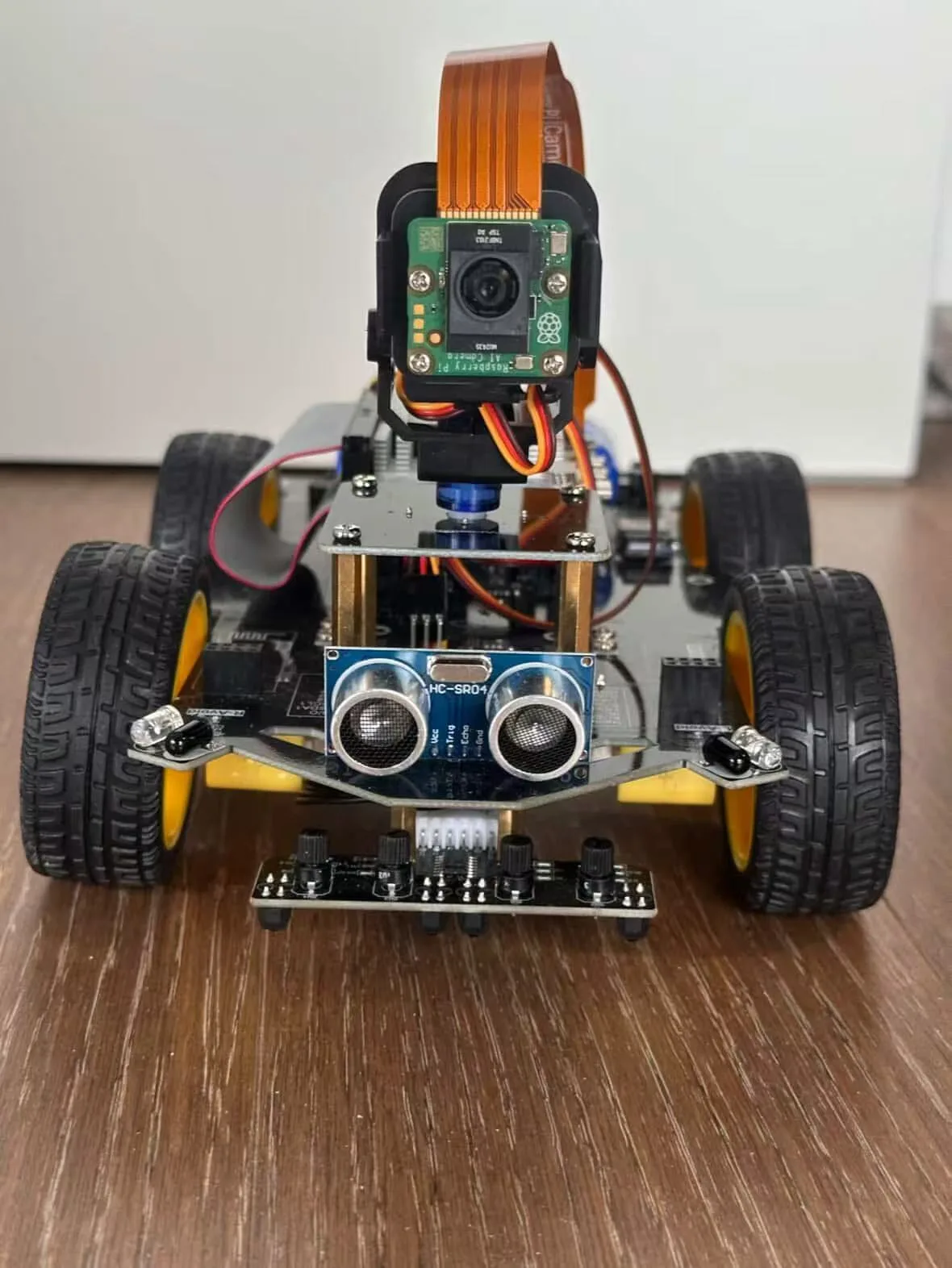
Front-mounted camera, ultrasonic sensor, and IR array.
My contribution
I wrote the Raspberry Pi software, focusing on IR-based lane steering and ultrasonic detection of vehicles and obstacles ahead.
Validation
The vehicle stayed in its lane for 30+ seconds, followed lead vehicles at 0.1–0.5 m/s, and reacted in approximately 100 ms against a 500 ms requirement. Tests covered indoor and outdoor conditions and independent emergency-braking checks.
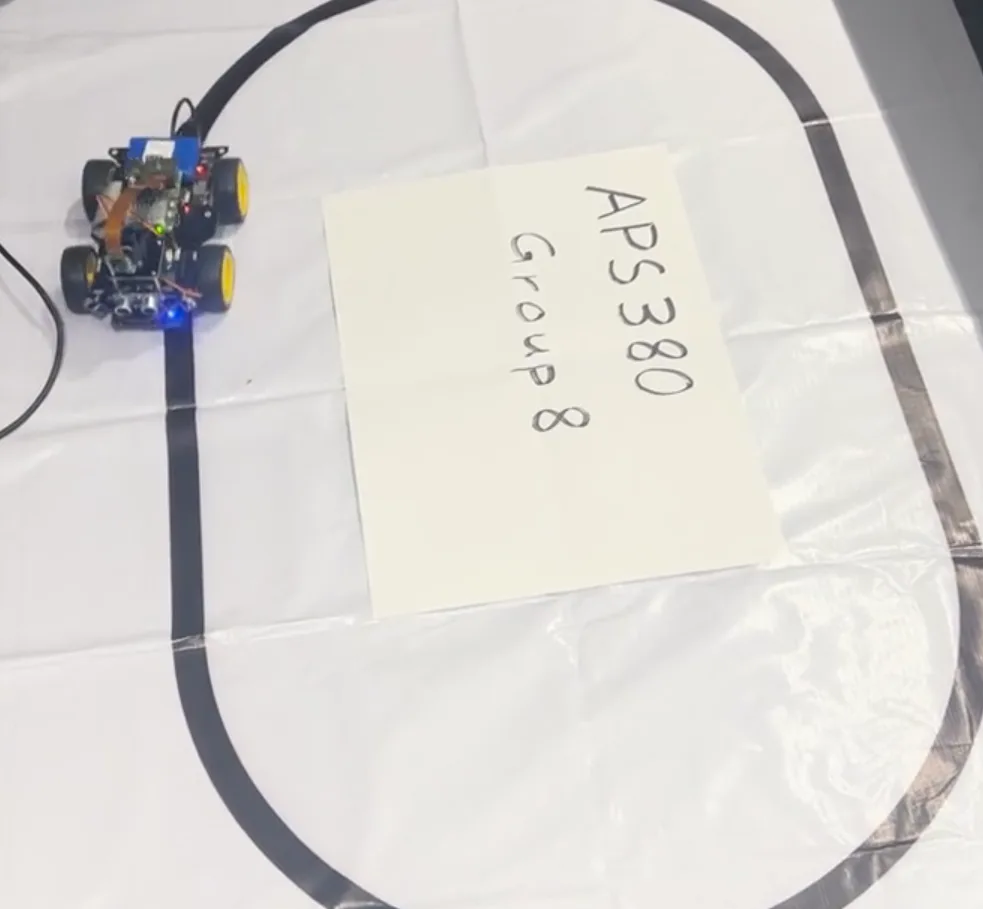
Track tests for lane keeping and following distance.
A pre-trained convolutional neural network detects stop signs at 30–60 cm, triggering a three-second stop. Vision takes 150–200 ms per frame, requiring explicit state management alongside the faster motor-control updates.
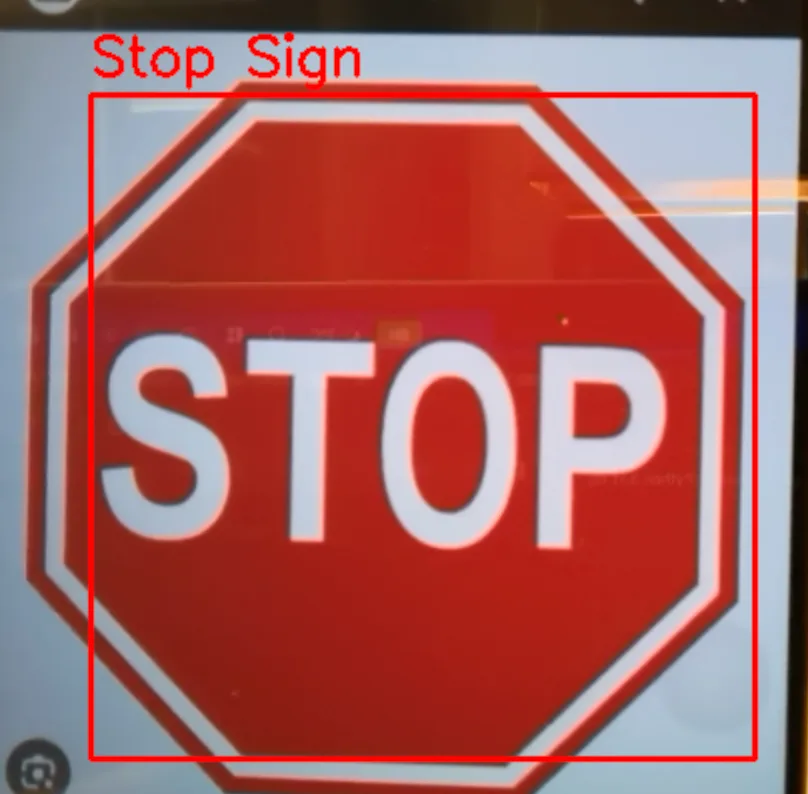
Stop-sign detection from the Pi camera.
Next iteration
Separate the vision and motor loops for better timing isolation. Wheel encoders could close the speed-control loop, while camera-based lane detection and model-predictive control could support more complex routes and smoother acceleration.